$27bn
Set aside for the first three Hunter-class frigates, out of a program once sold as nine ships for $35bn
Hunter-class frigates: sold as nine warships for $35 billion. We're now paying $27 billion for three
The Hunter-class frigate program was cut from nine ships to six, and close to $27bn is now set aside for the first three. The first won't arrive until 2032.
Aussie Outrage · · 6 min read
In June 2018, the Turnbull government announced that British company BAE Systems would design Australia's next fleet of anti-submarine warships, and build them in Adelaide. The plan was nine frigates for $35 billion, with construction starting from 2020 and the first ship in service in the late 2020s.
Eight years on, the fleet has been cut to six ships. Budget documents set aside close to $27 billion for the first three, the ABC reported in September. Steel wasn't cut on the first ship until 2024, and it is now due to be delivered in 2032.
$27bn
The price tag, year by year
Fewer ships, more money
Official cost of the Hunter-class program at each stage, billions of dollars
2018: nine ships
$35bn2020 Force Structure Plan: nine ships
$45.6bn2026: first three ships
$27bn
The $27bn for the first three ships includes building the Osborne shipyard. The last three ships will need a second contract and billions more.
Source: ANAO Report No. 21 2022-23; JCPAA (2024); ABC News (14 Sep 2026)
Show the data
| Item | Value |
|---|---|
| 2018: nine ships | $35bn |
| 2020 Force Structure Plan: nine ships | $45.6bn |
| 2026: first three ships | $27bn |
| When | Ships | Cost | First ship |
|---|---|---|---|
| June 2018 (BAE chosen) | 9 | $35bn | In service late 2020s |
| 2020 Force Structure Plan | 9 | $45.6bn | |
| May 2023 (ANAO audit) | 9 | 18 months late | |
| February 2024 (surface fleet review) | Cut to 6 | ||
| September 2026 (Budget documents) | First 3 of 6 | Close to $27bn | Delivered 2032 |
In 2018, Australians were told they'd pay about $3.9 billion a ship. The $27 billion for the first three works out to about $9 billion a ship. That's not a like-for-like comparison: the $27 billion also pays for the Osborne shipyard, which will build the later ships too. But defence analyst Marcus Hellyer, who has tracked the program's budget, estimates the six ships will cost more than $45 billion in total, more than was once budgeted for nine.
What went wrong
Nobody checked it was value for money. The Australian National Audit Office found in May 2023 that Defence's management of the procurement had been "only partly effective", and that its process "lacked a value for money focus". Its tender evaluation plan said it did not need to rank the tenders on value for money; earlier drafts had included that test, and it was removed. Parliament's Joint Committee of Public Accounts and Audit called it "baffling to say the least" that no value for money assessment was done on a (then) $35 billion procurement, and found that neither Defence nor the ANAO could name any other project that had gone to government without one.
A 10% discount nobody negotiated. The cost Defence gave cabinet included a 10 per cent reduction, cutting the figure by $2.1 billion, the ANAO found. Defence didn't tell the government that the reduction hadn't been negotiated with the bidders, or document where it came from. Defence later called it an "efficiency dividend".
The design wasn't finished. The Type 26 design the Hunter is based on was not yet a ship in the water when BAE was chosen. A Defence internal review found that "the extent of the Type 26 design maturity was over-stated and therefore, the extent of cost and schedule risk was under-estimated". By March 2023, the project was 18 months late and BAE's design contract had grown from $1.9 billion to $2.6 billion, a 36 per cent increase.
Then Australia changed it. Defence added an Australian-made CEA radar and the US Aegis combat system. Defence Industry Minister Pat Conroy told the ABC this made it a "developmental project", and blamed a system that "prioritised gold-plated requirements" without enough regard to cost and schedule. BAE told the parliamentary committee that scope changes, COVID-19 and the fastest rise in material prices "in living memory" were the main cost pressures.
What you're getting for it
Conroy says the Hunters will be the most advanced submarine-hunting warships in the world, in a country where 98 per cent of trade moves by sea. He says the main goal was to build a shipbuilding industry, not just ships. At the committee's September 2023 hearing, BAE said its Osborne workforce had grown to 1,758 people, with 572 engineers and plans for 150 apprentices in 2025.
King's College London's Alessio Patalano told the ABC that, given the changes, the complexity and the limits on shipyards and workers, no cheaper option was realistically available.
Critics don't agree. Hellyer says the ships try to do too much for their size, carrying 32 missile cells against 96 on many US destroyers, and that a "vanishingly small number" of very expensive ships makes less sense when warships are being hit in the Black Sea and the Red Sea. He argues the remaining money would be better spent on more of the Japanese Mogami frigates the government has already agreed to buy, or on autonomous systems.
Who's to blame?
The Coalition chose BAE and signed the contract in 2018. The parliamentary committee, chaired by Labor MP Julian Hill, said the former government had "decided to select BAE for a (then) $35 billion project anyway in breach of Finance Law", because no value for money assessment had been done. The Secretary of Defence has since told the committee: "I believe that Defence failed to provide clear advice around value for money."
The committee also accepted that the former government's decision to speed the project up had cut about three years from the time Defence had to plan it, and that COVID-19 caused delays and costs "beyond the control of BAE and Defence".
Labor has kept the program going, cut it to six ships, and is now funding the first three. Conroy blames the system he inherited.
Your share: the $27 billion set aside for the first three ships works out to about $970 for every Australian (on a population of about 27.9 million). The last three ships will cost more.
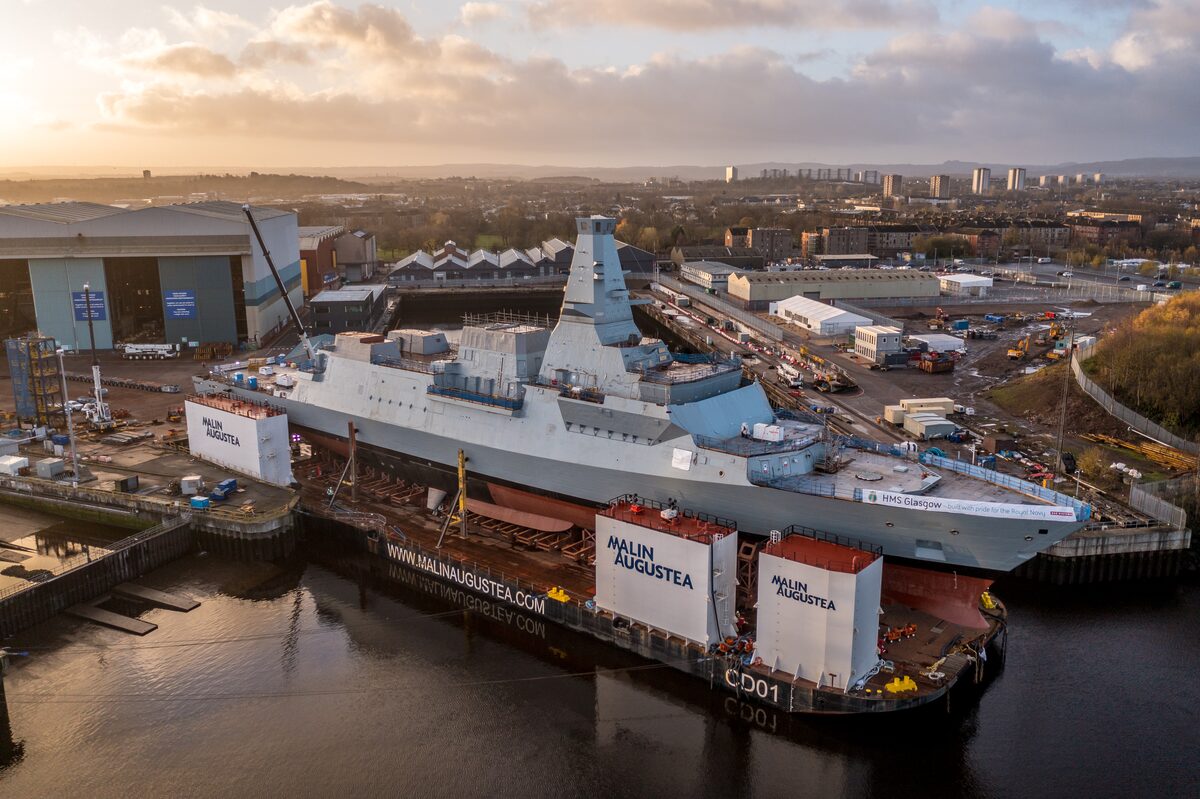
Top photo: HMS Glasgow, the first British Type 26 frigate, the design the Hunter class is based on, at Govan in Scotland, 2022. Photo: Ian Dick, CC BY 2.0, via Wikimedia Commons.
Sources
- Australian National Audit Office: Department of Defence's Procurement of Hunter Class Frigates, Auditor-General Report No. 21 of 2022-23 (May 2023) (opens in a new tab)
- Joint Committee of Public Accounts and Audit: Inquiry into Defence Major Projects Report 2020-21 and 2021-22 and the Procurement of Hunter Class Frigates, Chapter 3 (2024) (opens in a new tab)
- ABC News: Australia is spending $27 billion to build three warships. Will it be worth it? (14 Sep 2026) (opens in a new tab)
- Strategic Analysis Australia (Marcus Hellyer): The Hunter-class frigate program: delivering less, costing more, taking longer (27 Sep 2024) (opens in a new tab)
Spotted an error, or named in this story and want to respond? Tell us. We correct mistakes openly, under our editorial standards.
Got a story we should tell?
Waste you've seen up close, a policy that's hurting your family, a cost you can't keep up with. We read every tip and protect our sources.
Send us a tipMore in Government Waste
Suburban Rail Loop cost: $50bn promised, $96.4bn forecast
How much will the Suburban Rail Loop cost? $33.3bn for stage one, says the government, but the Auditor-General says it could top $36bn. Two stages: $96.4bn.
Aussie Outrage · · 12 min read
$1.6 million on pot plants for Big Build offices
Rail Projects Victoria spent an estimated $1.64 million on plant hire and maintenance, and the Suburban Rail Loop Authority almost $200,000 more, according to the state opposition.
Aussie Outrage · · 2 min read
$589 million to host nothing: what cancelling the Commonwealth Games cost Victoria
Victoria pulled out of the 2026 Commonwealth Games to save money. The Auditor-General found walking away cost $589 million with no discernible benefit, and the $6.9 billion figure used to justify it was overstated.
Aussie Outrage · · 2 min read

The $13 million machete ban: what the money actually pays for
Victoria set aside $13 million for its machete ban and amnesty bins. The bins cost about $2,400 each. The government still hasn't said where the rest of the money goes.
Aussie Outrage · · 2 min read