2.6x
North East Link's cost now, compared with the $10bn it was unveiled at in 2016
North East Link was sold as a $10 billion road. It now costs $26 billion
Melbourne's North East Link was unveiled at $10bn in 2016. It's now $26.1bn, Victoria's most expensive road. The Treasurer said 60% of the rise was the government's own choices.
Aussie Outrage · · 4 min read
In December 2016, Premier Daniel Andrews promised that a re-elected Labor government would build the North East Link: the "missing link" in Melbourne's freeway network, a 10-kilometre connection from the M80 Ring Road to the Eastern Freeway, tunnelling under the Yarra. The price was $10 billion.
In December 2023, Premier Jacinta Allan revealed the cost had reached $26.1 billion, making it Victoria's most expensive road project. It's due to open in 2028.
$26.1bn
The price tag, year by year
North East Link's price tag, estimate by estimate
Estimated cost, billions of dollars
The 2023 figure includes upgrades to the Eastern Freeway and M80 Ring Road that were added after the business case.
Source: AAP; ABC News (15 Dec 2023); Premier of Victoria (24 May 2026)
Show the data
| Date | Value |
|---|---|
| Dec 2016 | $10bn |
| May 2018 | $15.8bn |
| Dec 2023 | $26.1bn |
| When | Estimated cost | Due to open |
|---|---|---|
| December 2016 (election promise) | $10bn | |
| Business case | $15.8bn | |
| December 2023 (Budget update) | $26.1bn | 2028 |
| May 2026 (tunnelling finished) | $26.21bn ($21.21bn Victoria, $5bn federal) | 2028 |
That's $16 billion more than Victorians were first told, and $10 billion more than the business case the project was approved on.
What went wrong
The government kept adding to it. Treasurer Tim Pallas said about 60 per cent of the extra cost came from "deliberate decisions" by the government. AAP reported $6.4 billion in changes to the project, including an extra two kilometres of tunnel (taking it to 6.5km), design changes to keep roads away from homes, noise works, a busway and a rail extension. The ABC put the cost of the longer tunnels at nearly $2 billion, and the extra work on the Eastern Freeway and M80 Ring Road at $2.5 billion.
Building costs soared. About $3.1 billion of the increase was higher materials costs. Allan blamed cost escalation from the COVID-19 pandemic and the war in Ukraine, and said she felt "great frustration and disappointment".
The case was never updated. The 2018 business case found the road would return about $1.30 for every dollar spent. Critics, including the Public Transport Users Association and MPs in State Parliament, say that figure has never been publicly updated since the cost went up by more than $10 billion.
What you're getting for it
Tunnelling finished in 2026. The government says up to 15,000 trucks a day will use the tunnels instead of local roads, and that trips between Melbourne's north and east will be up to 35 minutes shorter. The price also buys upgrades of the Eastern Freeway and the M80 Ring Road, and a busway.
"This is productive infrastructure, supporting a productive economy," Allan said.
Who's to blame?
This one is a Labor project: promised by Andrews, built under Andrews and Allan. Allan points to the pandemic and global construction costs. But by her own Treasurer's account, most of the increase came from decisions the government made.
Shadow Major Projects Minister David Southwick said: "The scale of this blowout demonstrates that Labor's major project budget figures can no longer be believed."
The federal government has kept paying. In May 2024 it added $3.25 billion, taking Canberra's share to $5 billion.
Your share: the jump from $10 billion to $26.1 billion works out to about $2,300 for every Victorian (on a population of about 7 million). Some of that comes from federal taxes paid by every Australian, through Canberra's $5 billion.
Victorians vote on 28 November. This is one of a series on the cost of the Big Build. See also: the $15 billion question on Big Build corruption.
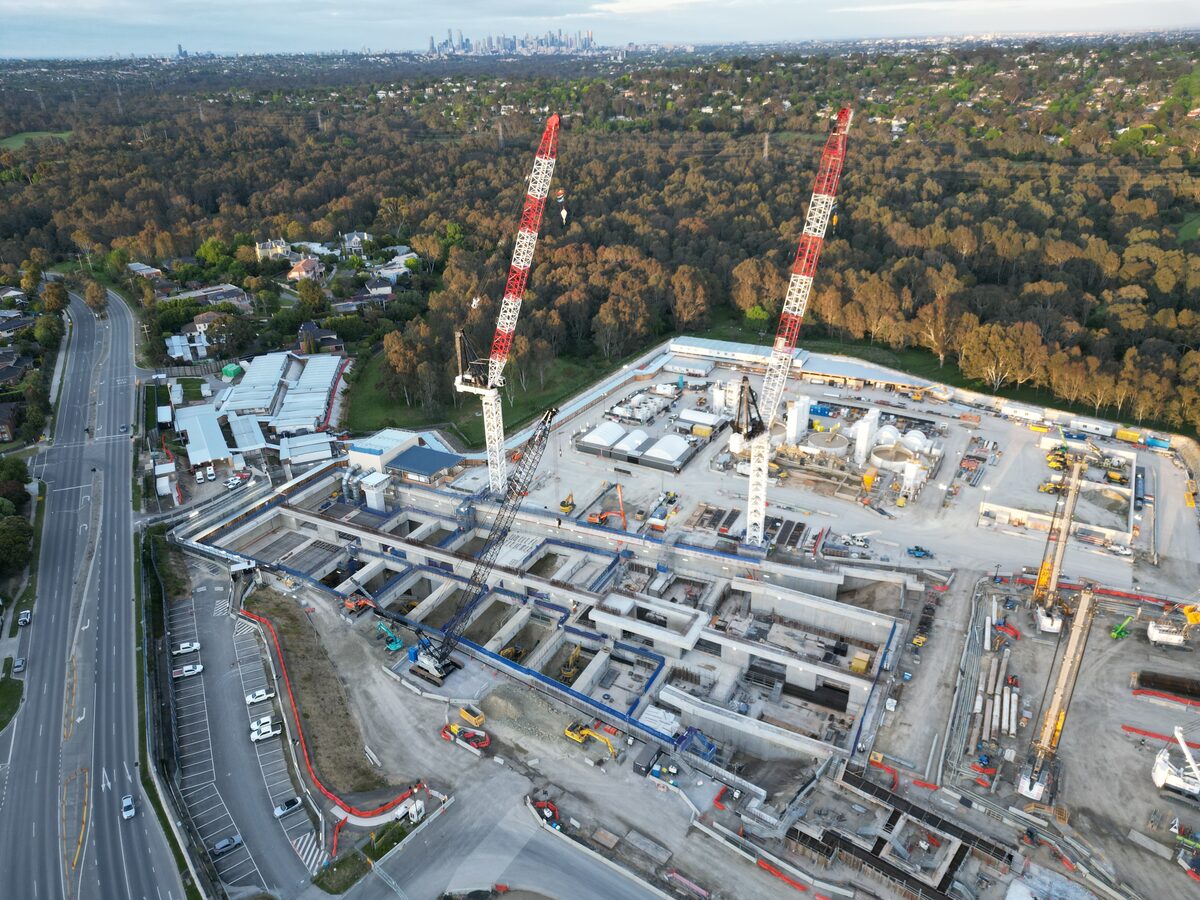
Top photo: North East Link works at Bulleen, Melbourne, October 2024. Photo: BobTanGo, CC BY 4.0, via Wikimedia Commons.
Sources
- ABC News: Victorian Premier Jacinta Allan reveals $10-billion blowout on North East Link (15 Dec 2023) (opens in a new tab)
- AAP: Project blowout on North East Link to cost $26 billion (Dec 2023) (opens in a new tab)
- Premier of Victoria: North East Link breakthrough (24 May 2026) (opens in a new tab)
- AAP: Feds give Vic toll road build a $3.25 billion boost (May 2024) (opens in a new tab)
- Victorian Legislative Assembly Hansard, 19 March 2024 (debate on the cost increase) (opens in a new tab)
- Infrastructure Magazine: North East Link business case released (May 2018) (opens in a new tab)
Spotted an error, or named in this story and want to respond? Tell us. We correct mistakes openly, under our editorial standards.
Got a story we should tell?
Waste you've seen up close, a policy that's hurting your family, a cost you can't keep up with. We read every tip and protect our sources.
Send us a tipMore in Government Waste
Suburban Rail Loop cost: $50bn promised, $96.4bn forecast
How much will the Suburban Rail Loop cost? $33.3bn for stage one, says the government, but the Auditor-General says it could top $36bn. Two stages: $96.4bn.
Aussie Outrage · · 12 min read

$1.6 million on pot plants for Big Build offices
Rail Projects Victoria spent an estimated $1.64 million on plant hire and maintenance, and the Suburban Rail Loop Authority almost $200,000 more, according to the state opposition.
Aussie Outrage · · 2 min read
$589 million to host nothing: what cancelling the Commonwealth Games cost Victoria
Victoria pulled out of the 2026 Commonwealth Games to save money. The Auditor-General found walking away cost $589 million with no discernible benefit, and the $6.9 billion figure used to justify it was overstated.
Aussie Outrage · · 2 min read

The $13 million machete ban: what the money actually pays for
Victoria set aside $13 million for its machete ban and amnesty bins. The bins cost about $2,400 each. The government still hasn't said where the rest of the money goes.
Aussie Outrage · · 2 min read